
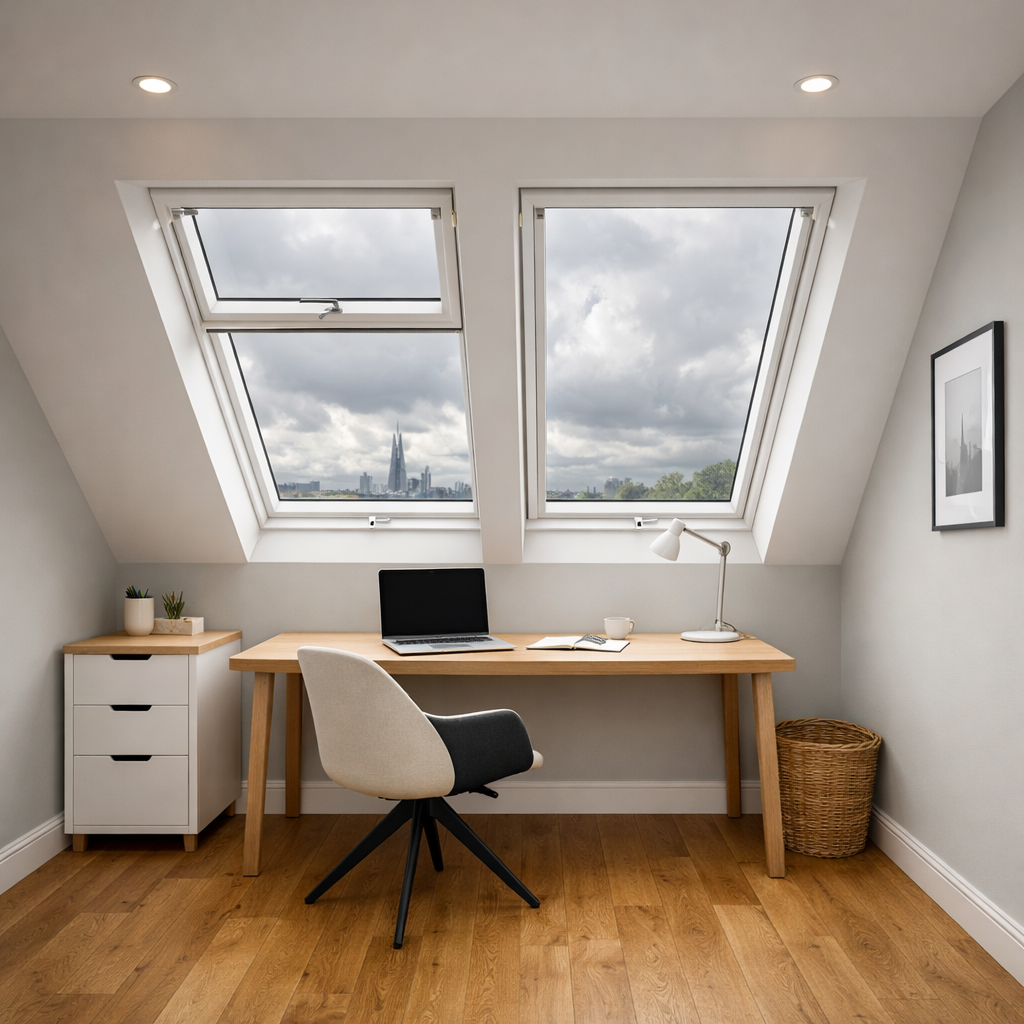
Running out of rooms? The kids are sharing, the home office is the kitchen table, and moving in London now costs £60,000+ in fees alone. The answer is sitting right above your head. A well-built loft conversion turns dead roof space into a proper bedroom, en suite or studio, and can add up to 24% to your property value, according to 2025 Nationwide research (see our full cost guide). We've been building them across West London and Surrey for over 15 years.
London houses come in every shape, and not every conversion suits every property. A rooflight on a roof without enough headroom wastes money; a mansard on a 1970s semi makes no architectural sense. Here is how each option works and who it is right for. To estimate your own budget, try our free loft conversion cost calculator.
A dormer extends vertically from your existing roof slope to create a box of full-height space. It is the most popular type across London because it gives a proper-feeling bedroom on almost any terraced or semi-detached house.
A Velux conversion stays within the existing roofline, with no structural change to the roof shape. It is the quickest and cheapest route, as long as your existing headroom is already around 2.2 to 2.4 metres.
Hip-to-gable rebuilds the sloping hip side of your roof as a vertical gable wall, which sharply increases floor area and headroom. It is the go-to option for semi-detached and end-of-terrace homes across Ealing, Hounslow and Hillingdon.
A mansard restructures the entire rear roof slope into near-vertical walls topped by a flat roof, effectively adding a full new storey. It gives the largest possible floor area and the most refined finish, though planning permission is almost always required.
Not sure which type fits your home? Start by matching your property type to the typical recommendation. Every house is different, so we confirm the right approach during the free survey.
| Your Property | Best-Fit Conversion | Why |
|---|---|---|
| Victorian Terrace Pre-1900, cut timber roof |
Rear Dormer or Mansard | A steep roof pitch suits a dormer; mansards add the most space in conservation areas. |
| Edwardian Semi 1900 to 1918 |
Hip-to-Gable + Rear Dormer | The hip end is the limiter, so squaring it off unlocks significant floor space. |
| 1930s Semi Hipped roof, deep eaves |
Hip-to-Gable + Rear Dormer | Usually the highest-value conversion on this house type, adding a true second floor. |
| 1960s-80s Semi Trussed roof structure |
Dormer (Trussed) | Truss roofs need structural redesign, so they cost a little more, but they are very achievable. |
| Bungalow | Full Conversion | Effectively adds a whole upper floor, and often needs significant roof modification. |
| End-of-Terrace | Side Dormer or Hip-to-Gable | The side-facing slope creates extra space most terraces cannot access. |
We work across all London boroughs, but the bulk of our projects sit in West London and the borders of Surrey. We know the planning departments, the typical roof structures and the on-street logistics for these areas inside out.
Our home patch, and where we deliver more projects than anywhere else, mostly 1930s and 1950s semis with hipped roofs. Hip-to-gable conversions dominate here, often combined with a rear dormer. See our Hayes builders page.
A mix of Victorian terraces in Hanwell and Edwardian semis around Pitshanger and Northfields. Parts of Ealing fall within conservation areas, so we always check planning constraints before quoting. See our Ealing builders page.
Heavy on 1930s semi-detached stock around Hounslow Heath, Lampton and Isleworth, so hip-to-gable combinations dominate. We also manage flight-path noise on the roof insulation specification. See our Hounslow builders page.
Period properties throughout, many in conservation areas, so mansard and dormer conversions are common and planning takes longer. We factor an extra 6 to 8 weeks into the Richmond timeline. See our Richmond loft conversions page.
Strong stock of inter-war semis and post-war detached homes. Compared with inner-London terraces, these properties usually offer easier access and shorter build times.
Beyond West London we regularly work across these boroughs and the Surrey commuter belt, so our standard catchment runs right out. See our Surrey builders page, or call to confirm your postcode.
West London is built on Victorian and Edwardian housing stock, and those roofs were put together using cut-timber methods that no longer match what most builders work with today. Each one is slightly different, hand-built by carpenters over a hundred years ago.
Two things matter when you convert one. The structural assessment has to be done by an engineer who understands period construction, and the methods used to alter the roof have to respect what is already there. Get either wrong and you end up with sagging ridge lines and cracking ceilings on the floor below. For period homes in conservation areas, see our loft conversion planning permission guide.
London loft conversions sit at the upper end of UK price ranges, because of higher labour rates, tighter access and parking. The table below shows current 2026 ranges. All prices include structural works, insulation, electrics and standard finishes, and we provide a fixed-price written contract after every free survey.
| Conversion Type | Typical Cost | Build Time | Planning |
|---|---|---|---|
| Velux / Rooflight Conversion | £32,000 to £45,000 | 6 to 8 weeks | Permitted Development |
| Dormer Conversion | £50,000 to £75,000 | 8 to 12 weeks | Usually PD |
| Hip-to-Gable Conversion | £55,000 to £85,000 | 10 to 14 weeks | Usually PD |
| Hip-to-Gable + Rear Dormer | £70,000 to £95,000 | 12 to 16 weeks | Usually PD |
| Mansard Conversion | £70,000 to £120,000+ | 12 to 16 weeks | Planning Required |
| En Suite Bathroom (add-on) | £8,000 to £18,000 | + 2 to 3 weeks | Included in build |
| Loft Staircase | £3,000 to £8,000 | Included | Part of build regs |
Indicative ranges for London 2026. For a detailed regional and per-m² breakdown, see our full loft conversion cost guide, try our loft conversion cost calculator, or explore all our construction calculators.
Every project follows the same six stages, so you always know what happens next, with no surprises in scope, timing or cost.
Our project manager visits, measures the available headroom, checks the structure and confirms which conversion type suits the property. The visit takes around 45 minutes with no obligation.
Our architectural team prepares full drawings and structural calculations, and handles the Lawful Development Certificate or full planning application, whichever your project needs.
Once the design is signed off, you get a written contract covering every element of the build. The agreed price does not change during the project unless you request a change yourself.
We install floor joists, steel beams, roof alterations and the dormer or mansard structure, with the building control inspector visiting at key stages to confirm compliance.
Insulation, staircase, first-fix electrics and plumbing all go in before plasterboard, so the room is fully wired, plumbed and insulated before any finishing work begins.
The building inspector issues your completion certificate. We walk through the finished space with you, resolve any snagging, and hand over your written workmanship guarantee.
A fixed-price contract only protects you if you know exactly what it covers. Here is what sits inside our standard quote, and what to budget for separately.
Most loft conversion disputes come from the same handful of warning signs at the quoting stage. Knowing what to watch for can save you tens of thousands and months of stress.
This usually means missing scope or cheaper materials, with "variation" costs coming back once the work has started and you have no easy way to refuse.
A single-page quote with one number is not a contract. Walk away unless every element of the build is listed and priced separately in writing.
Any builder asking for more than 10 to 15% before materials are on site is a serious concern. Reputable companies stage payments against work completed, not in advance.
Building regulations sign-off is non-negotiable. An unsigned loft conversion creates major problems when you sell, and is technically illegal.
The best results come from in-house teams. Builders who farm structural, electrical and plastering work out to different firms struggle to coordinate, and quality varies stage to stage.
Check Companies House and ask for previous project addresses you can drive past, so you can verify the work was completed and is still standing.
Three recent West London projects, showing the property type, the conversion approach, the rough cost band and the result. For more examples, visit our portfolio.
This Victorian end-of-terrace came with a steep slate roof. The owners wanted a master bedroom plus en suite to free up the smaller rooms for their two children.
We built a rear dormer with two front-slope Velux windows, finished with reclaimed brick on the dormer cheeks to match the house. The project ran under Permitted Development, with a Lawful Development Certificate filed for the owners' records.
A 1930s semi with a classic hipped roof. The original loft was usable but cramped, with 1.9m of headroom at the centre and rapidly sloping eaves.
By squaring off the hip end and adding a full-width rear dormer, we created a master bedroom, en suite and storage area. The finished space added 32 m² and an estate-agent valuation uplift of around £145,000.
An Edwardian mid-terrace in a Richmond conservation area, where full planning was required with strict conditions on slate matching, dormer setbacks and window styling.
Our planning consultant managed the full application, including the heritage statement and pre-app advice. The completed mansard added a master suite plus a separate study, effectively a full additional storey.
Our project manager will visit your property, check suitability, advise on the best conversion type and tell you exactly what the project would cost. Or get an instant estimate with our free loft conversion calculator.