
How to Choose a Builder in London: Lessons From a Greenford Home We Were Called In to Rescue
Knowing how to choose a builder in London is the single most important decision a homeowner makes before any extension or renovation begins. We were reminded of that recently in Greenford, where we were asked to look at a home that a previous builder had left half finished, leaking and unsafe in places. It was genuinely sad to walk through, and it is the clearest example of poor workmanship we have seen in a long time.
At Signature Build Properties, we are usually called in at the start of a project. This time we were called in to pick up the pieces of someone else’s. The owner has asked to remain anonymous, which we completely respect, so no names, no address and no identifying photos appear here. What we can share, with their permission, are the conditions we found, because they tell every London and West London homeowner exactly why the cheapest quote is so often the most expensive decision in the end.
This article walks through what bad building work really looks like, using photographs from the Greenford home. It then explains the warning signs to watch for, how to choose a good builder who will not leave you in this position, and what your options are if a builder has already let you down.
A Greenford Homeowner Left With a Half Finished, Leaking Home
The homeowner did what most people do. They wanted an extension and renovation, they gathered a few quotes, and they went with one that felt affordable. Months later the builder had walked away with the work nowhere near complete. The roof was letting water in, the windows were finished with the wrong fixings, walls were cracked, wiring was left exposed, and almost every room had something wrong with it.
What made the visit difficult was not just the scale of the problems. It was the position the owner had been left in. They had paid out a significant sum, they were living around an unfinished building site, and they were understandably worried about how much it would cost to put right. This is the human cost of bad building work that rarely gets talked about, and it is why we treat every rescue project with patience and honesty.
It is heartbreaking to see a family left living in a home that should have been their proudest investment, surrounded instead by leaks, cracks and unfinished work. We are doing everything we can to put it right for them, room by room.
For homeowners who want the wider picture, we have already written a detailed guide on the most common problems homeowners face during a build. The Greenford home is what happens when almost all of those problems land in one project at once.
What Bad Building Work Really Looks Like
The photographs below were taken during our assessment. Each one shows a different failure, and together they explain why the home is not currently safe or weathertight. These are real examples of poor workmanship, not stock images, and they are the kind of details a homeowner is rarely shown until it is too late.
The Leaking Roof and Water Getting Into the Home
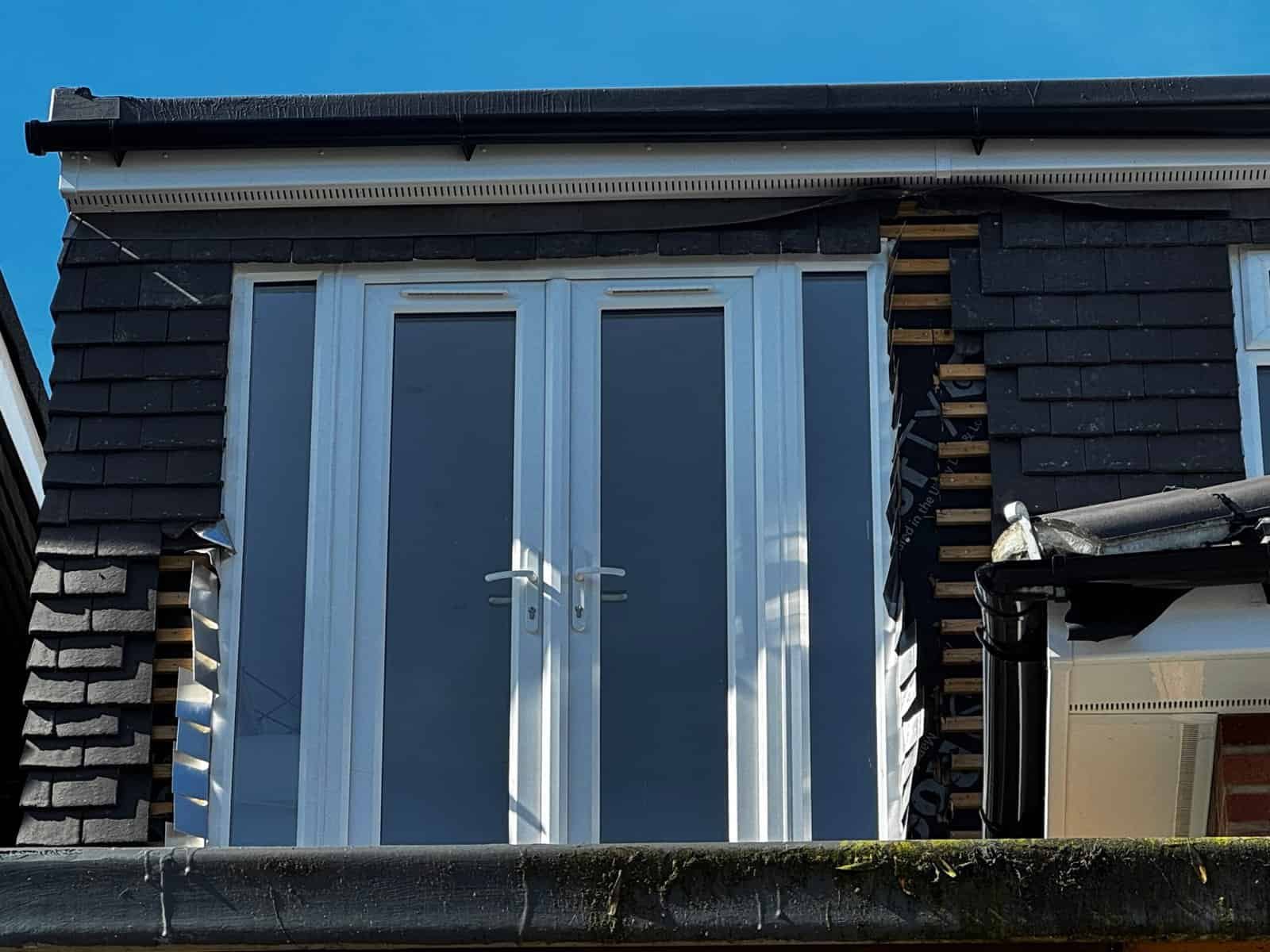
The most urgent issue is water. On the outside of the loft dormer, the slate cladding was never finished. Whole sections of bare timber batten and black breather membrane have been left open to the weather. Breather membrane is never designed to be a final surface. Once it is exposed to rain and sunlight it breaks down quickly, and water finds its way straight into the structure behind it.
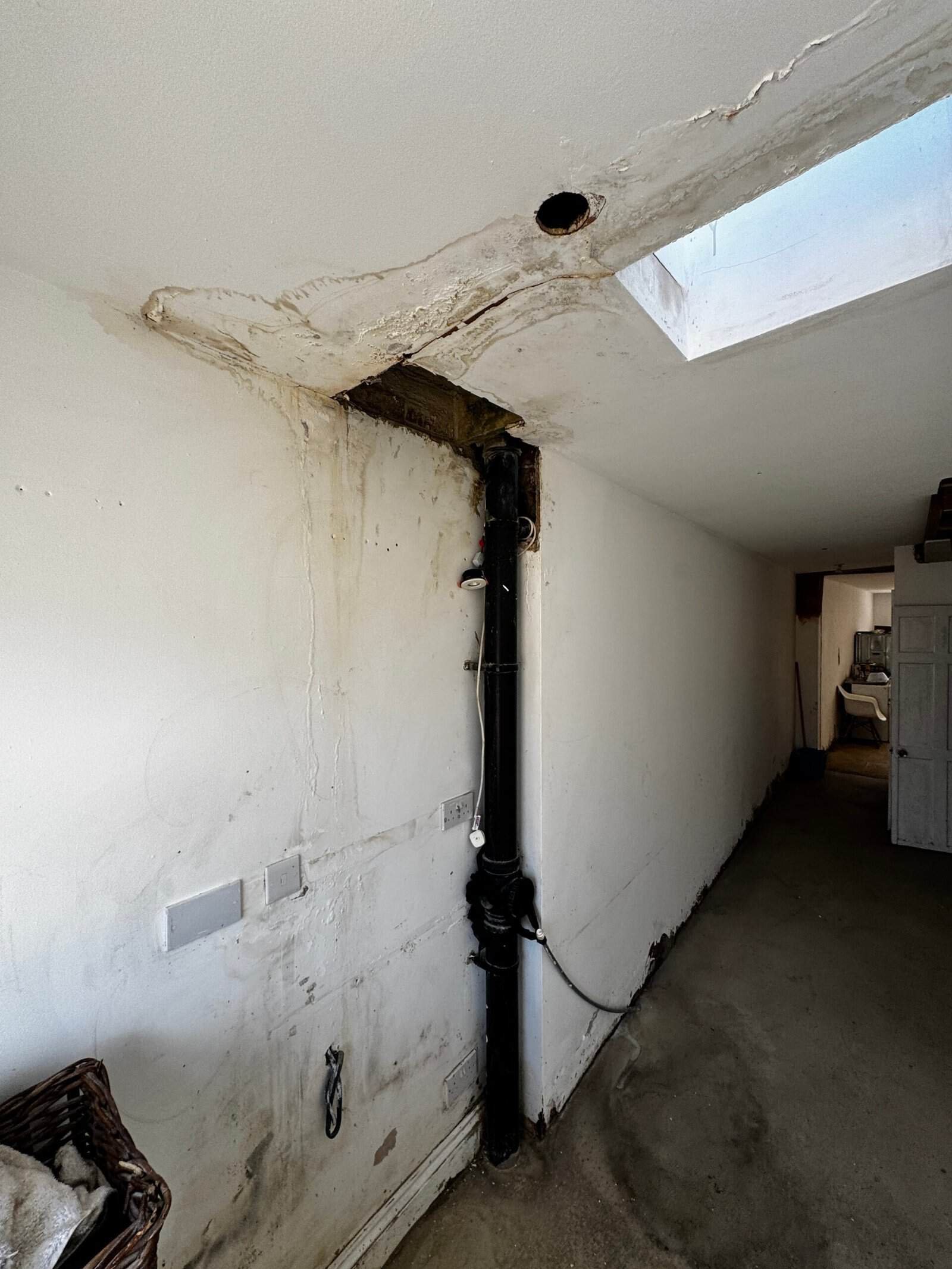
Inside the property, the result is exactly what you would expect. The ceiling around the rooflight is heavily water stained, the paint has blistered and peeled, and damp has tracked down the wall and across the boxing around a soil pipe. A home cannot be lived in safely like this, and left untreated, persistent damp leads to rot, mould and damage to plaster and electrics.
Stained Ceilings, Cracks and Rust Around the Steelwork
Across the open plan ground floor, the ceilings carry brown water marks and fine cracks, and rust coloured staining bleeds through the plaster around the structural steel and supports. Staining near steelwork is a warning sign in itself. It can point to steel that was never properly protected, or to ongoing damp reaching the structure. Either way it needs investigating rather than painting over.
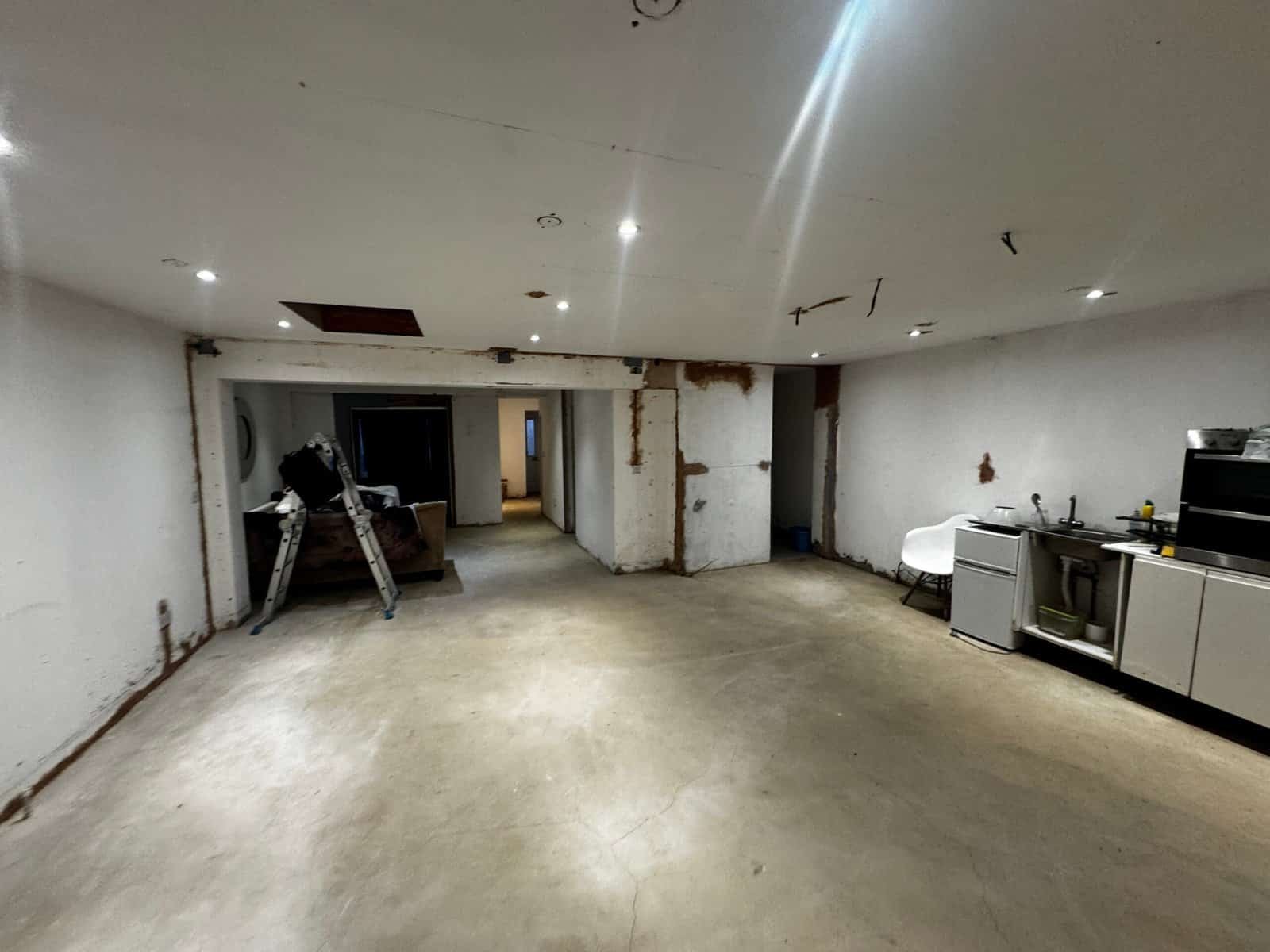
This is also the reality the homeowner has been living around. A makeshift kitchen of mismatched units sits against a wall of damaged plaster, beneath a ceiling marked with damp and cracks. Asking a family to cook, wash and live in a space like this, for months, is the part of the story that statistics never capture.
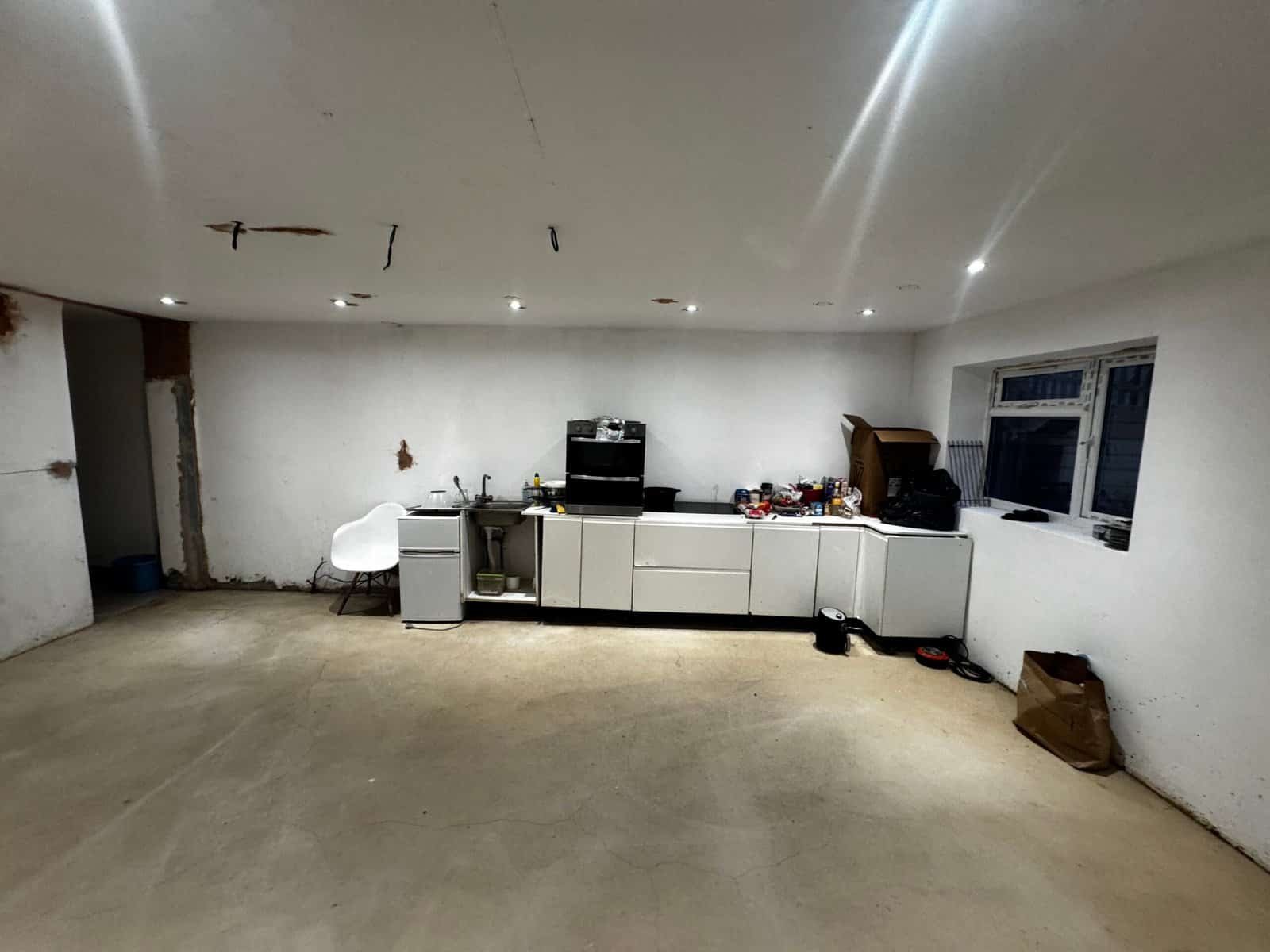
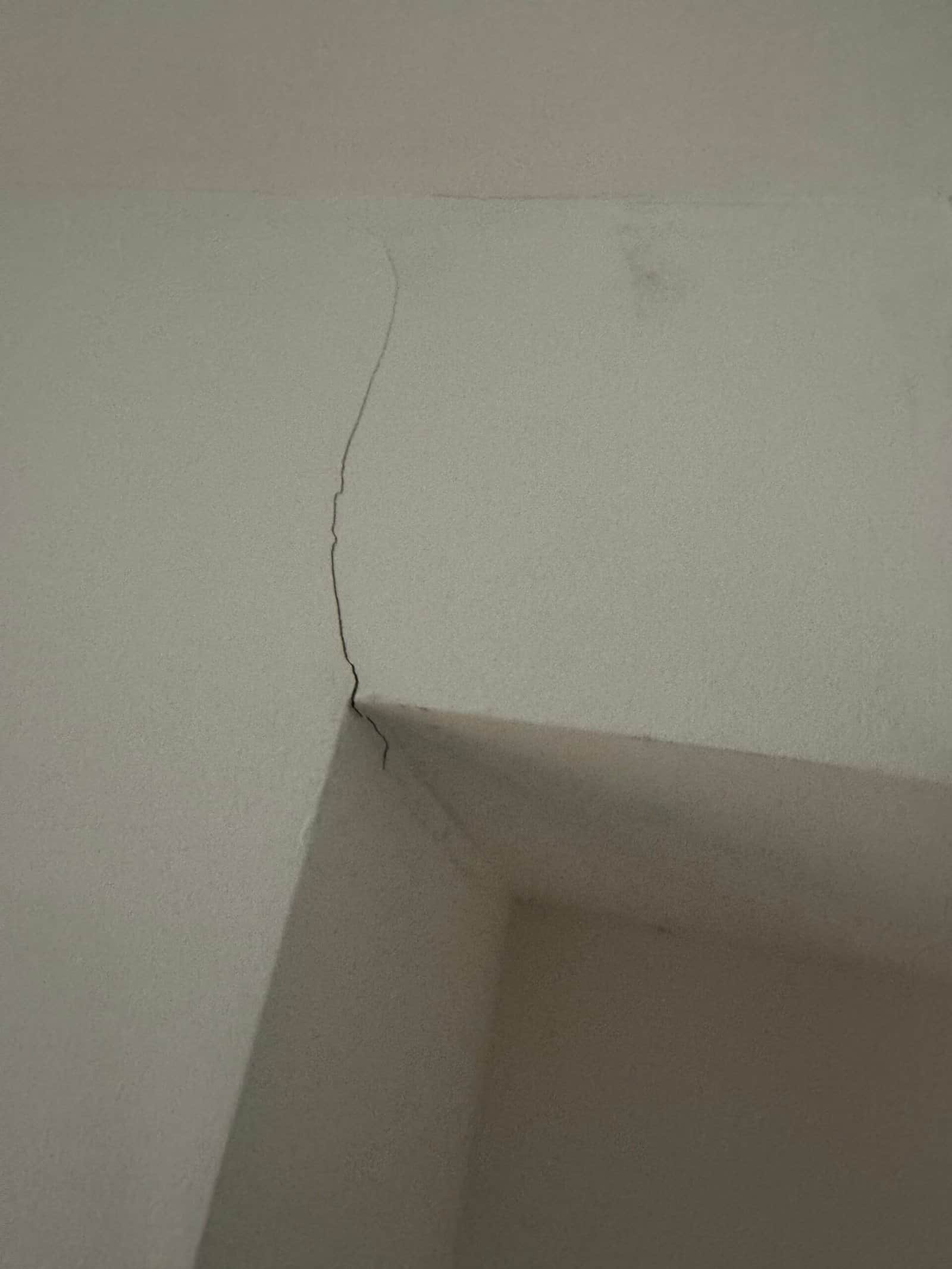
Hairline cracks at the junction between walls and ceilings can be normal in a settling building. What concerned us here was the pattern of cracking combined with everything else, including a cracked wall beside a crudely cut hole near the ceiling. In a recently worked on property, cracks like these often point to missing reinforcement at the joints or movement that was never addressed.
Black Screws on White Windows, Mould and Poor Sealing
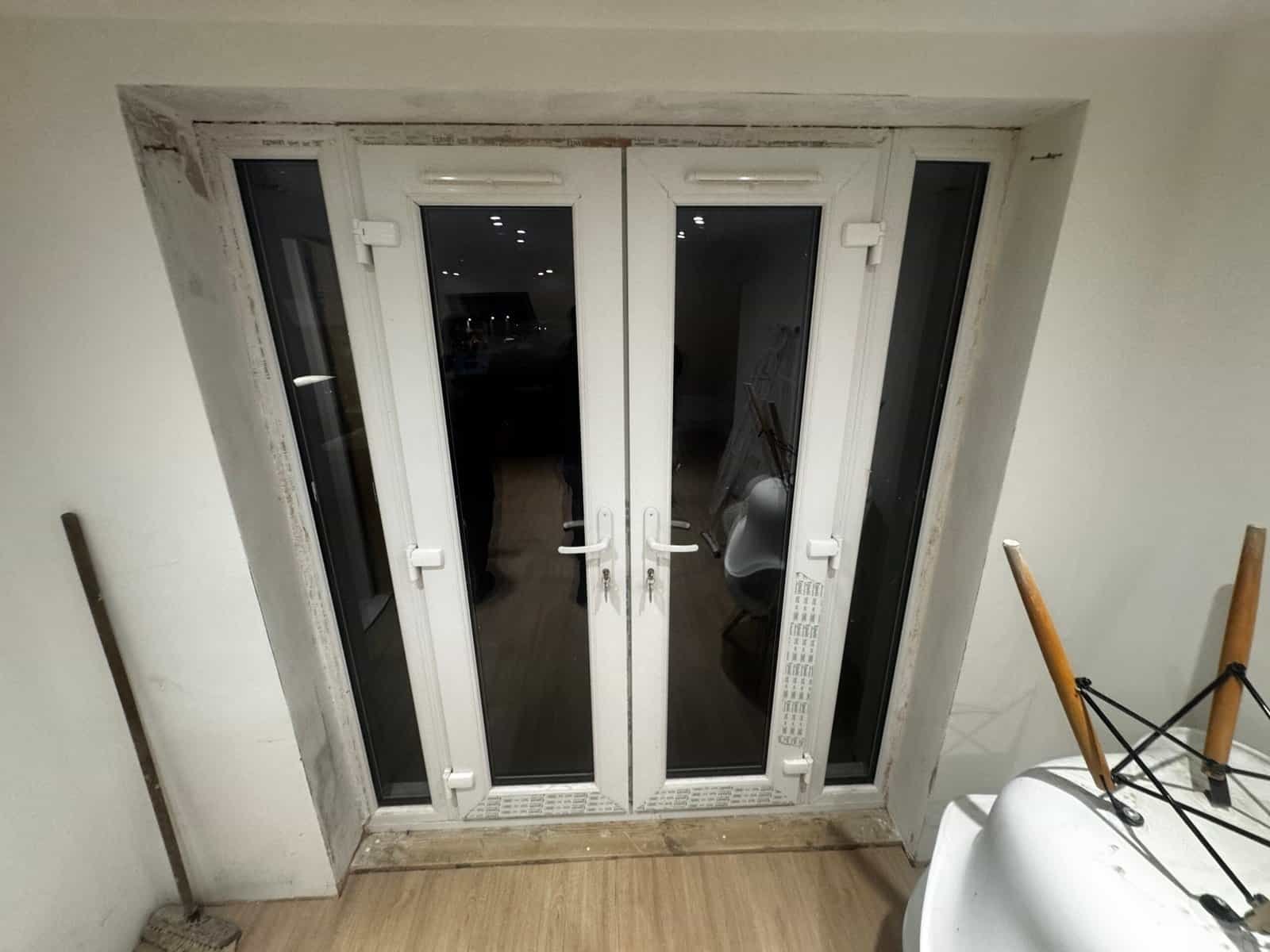
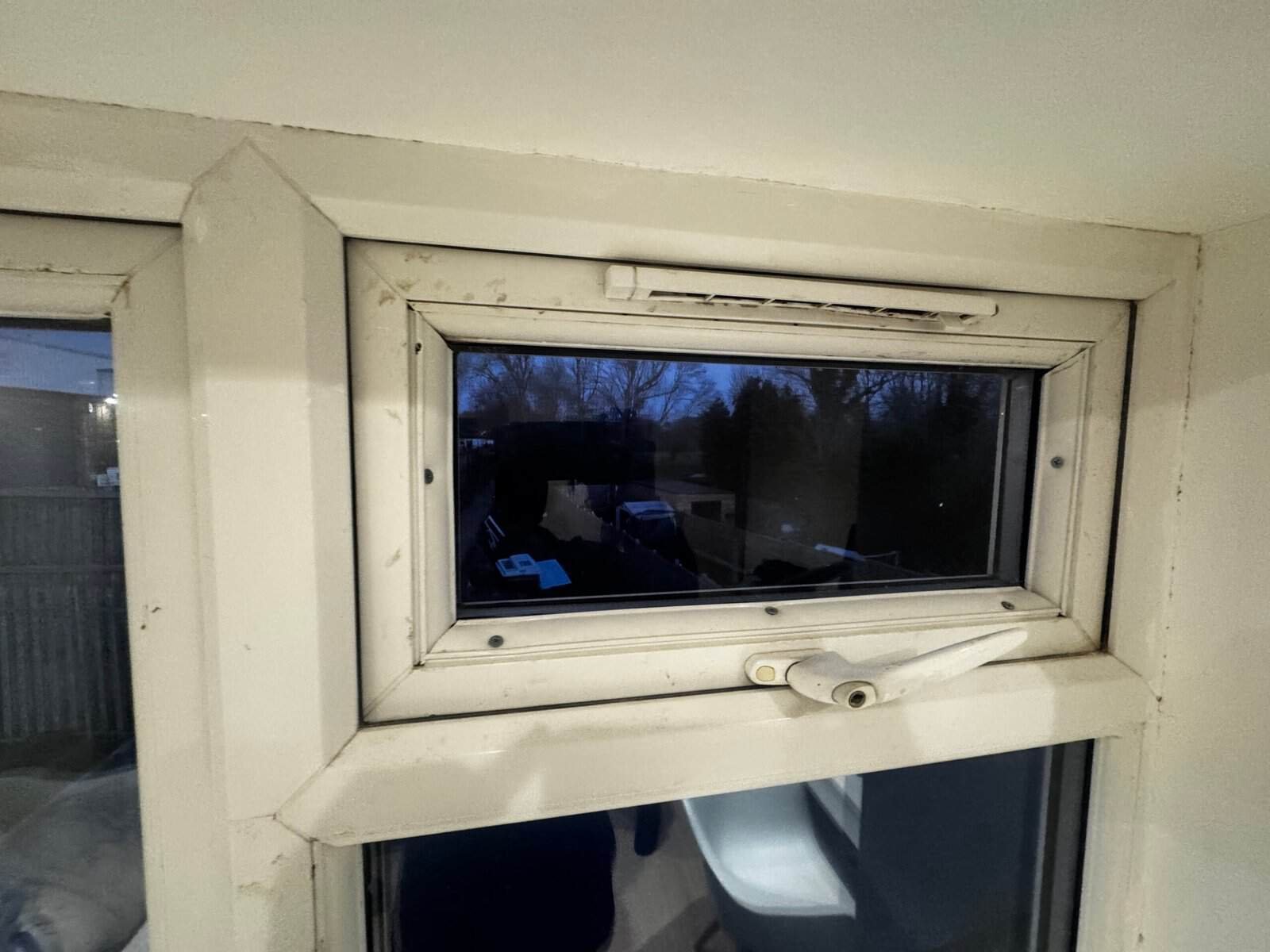
The windows are a smaller detail, but they reveal a great deal about a builder’s standards. Crisp white uPVC windows had been fixed using black screws driven through the face of the frame. The right way to install these windows does not leave dark screw heads on show across a white frame. It looks wrong, and it tells you the person fitting them was rushing and did not care how the finished job looked.
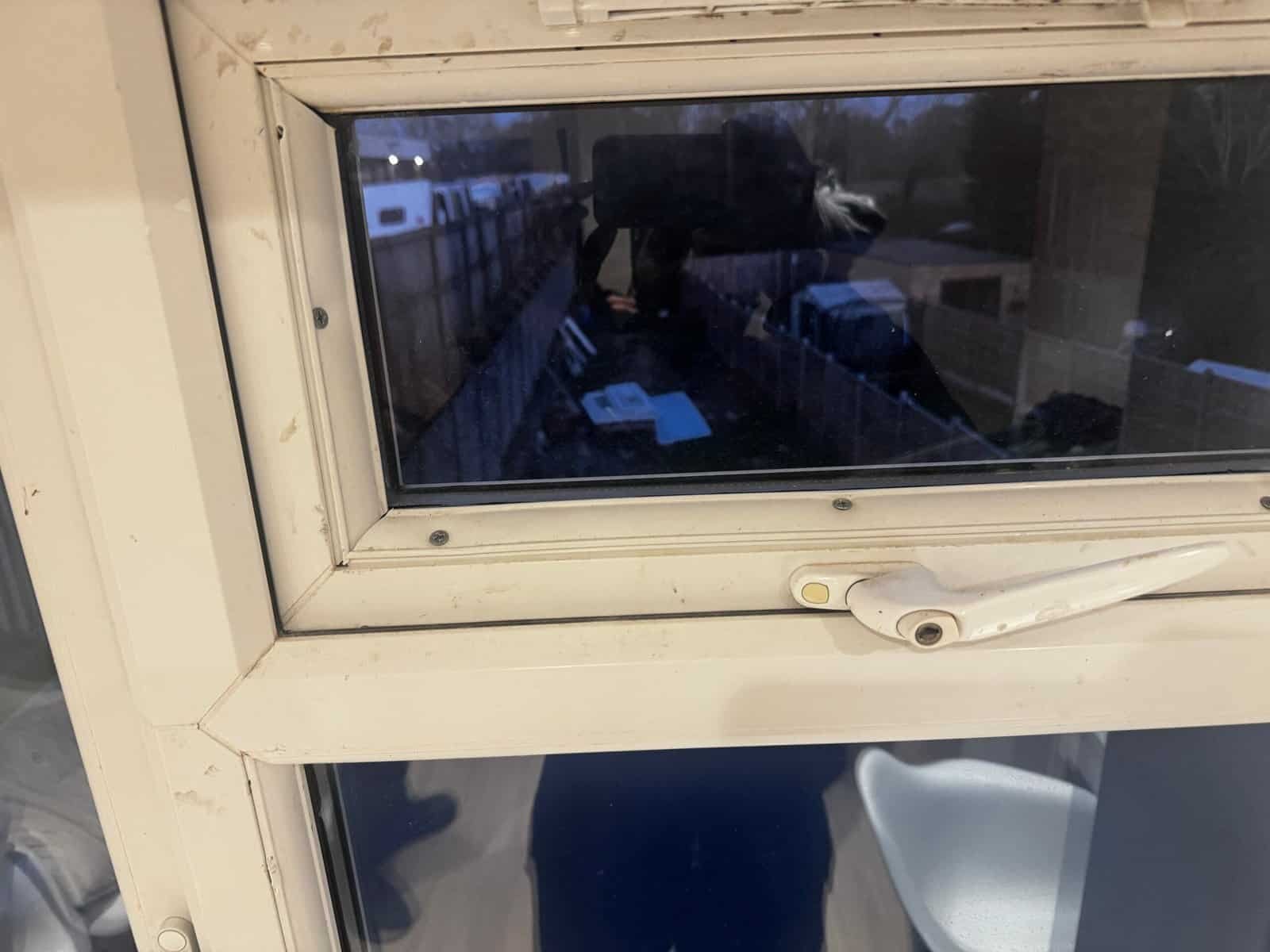
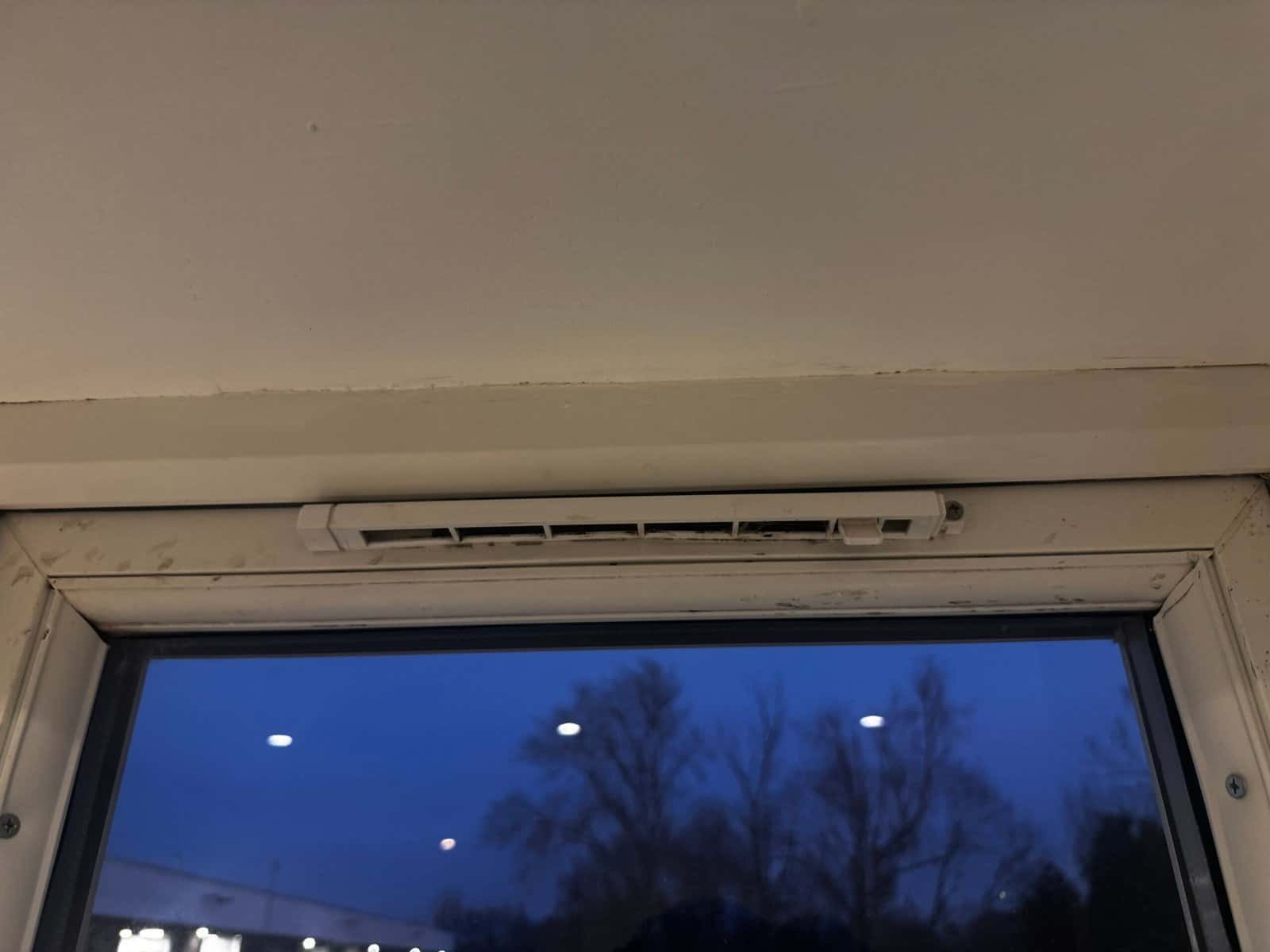
Worse than the screws is what is happening around the frames. Several windows show black mould and dark staining at the head, with gaps and rough sealant where the frame meets the wall. Poor sealing lets cold air and moisture in, encourages condensation, and over time damages the surrounding plaster. It is uncomfortable to live with and unhealthy to breathe around.
Unfinished Doors, Reveals and a Job Never Handed Over
The French doors to the rear were installed but never properly finished. The plaster reveals around the opening are rough and patchy, the threshold detail is messy, and protective film and labels were still left on the frames. Protective film left in place is a quiet giveaway that a job was abandoned rather than completed and handed over. A finished project is cleaned, snagged and signed off, not walked away from.
Exposed Wiring and Genuine Safety Concerns
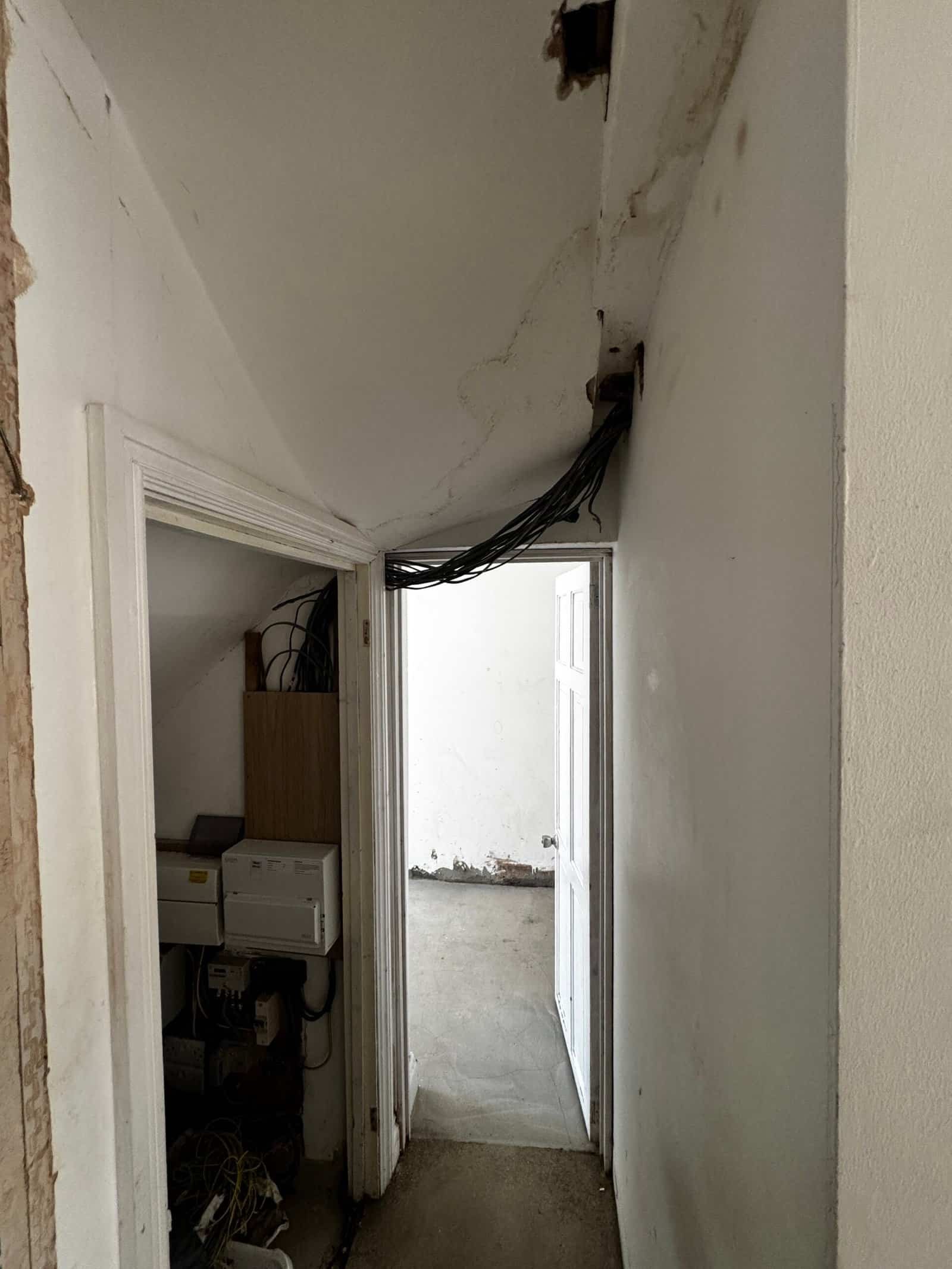
The detail that worried us most was the electrics. In one hallway, a hole had been knocked through the wall with loose cables draped across the ceiling, and a cupboard housing the consumer unit and boiler was left with untidy, exposed wiring on show. Electrical work that is left open and unfinished is not just unsightly. It is a safety risk, particularly in a home where people are still living.
Taken on its own, any one of these issues would be disappointing. Taken together, in a single home, they show a builder who was out of their depth, cutting corners, and ultimately walked away. For the wider list of pitfalls to plan around, our guide to common home extension problems in London and Surrey is a useful companion to this case study.
The Warning Signs of a Bad Builder
Most homeowners are not builders, so it is unfair to expect them to spot structural shortcuts. What they can do is recognise the behavioural and visible warning signs early, often before a contract is even signed. The grid below sorts the signals we look for into three groups.
A quote far cheaper than every other, pressure to pay large sums up front, no written contract, no proof of insurance, and a reluctance to show previous completed work or references.
Vague quotes with no breakdown, no clear programme of works, payment stages not linked to progress, and answers that feel rushed or dismissive when you ask how things will be done.
A detailed written quote, evidence of insurance and relevant experience, a portfolio you can view, references you can contact, and a single point of contact for the build.
Wrong or mismatched fixings, rough sealing and reveals, protective film left on, exposed wiring, and any sign of damp or staining being painted over rather than investigated.
The Greenford home failed almost every one of these tests. The work that looked cheap at quote stage has now created a repair bill far larger than choosing a reputable builder would ever have cost.
How to Choose a Good Builder in London
Learning how to find a good builder is mostly about slowing down and asking the right questions before any money changes hands. The steps below are the same checks we encourage every homeowner to make, whether or not they ever work with us. Our separate article on the mistakes to avoid when hiring a builder goes into each of these in more depth.
Check Real, Completed Projects
Ask to see finished work that is similar to yours, ideally in person or through a detailed portfolio. A builder confident in their quality will be glad to show it. You can see examples of our own completed projects on our portfolio page.
Confirm Insurance and Experience
Ask for proof of public liability insurance and check that the builder has genuine experience with your type of project. Extensions, loft conversions and full renovations each demand different skills.
Never Choose on Price Alone
A quote that sits far below the others is rarely a bargain. It usually means something has been missed, or that corners will be cut later. Compare what is actually included, not just the headline figure.
Get Everything in Writing
Insist on a detailed written quote and a contract that lists inclusions, exclusions, materials and a payment schedule tied to progress, not to dates. Stage payments linked to completed work protect you if things go wrong.
Agree How You Will Communicate
Establish a single point of contact and how often you will receive updates. Clear communication is one of the strongest predictors of a build that runs smoothly from start to finish.
To make this easier, we created a free Homeowner’s Build Preparation Checklist that walks through these checks step by step, from choosing a builder to the final snagging at the end of the project.
What to Do If a Builder Has Left the Job Unfinished
If you are already in the position the Greenford homeowner found themselves in, it can feel overwhelming. The situation is usually more recoverable than it first appears, provided the next steps are taken calmly and in order.
| Step | What To Do | Why It Matters |
|---|---|---|
| Document Everything | Photograph all defects and unfinished work, and keep every quote, invoice, message and contract. | A clear record supports any complaint, insurance claim or legal action, and helps a new builder price the repairs accurately. |
| Get an Independent Assessment | Have a reputable builder or surveyor inspect the work and identify what is unsafe, what is unfinished and what must be redone. | You cannot fix what you have not measured. An honest assessment turns a frightening situation into a clear plan. |
| Make Safety the Priority | Address anything dangerous first, especially exposed electrics and water ingress. | Protecting the people living in the home, and preventing further damage, always comes before cosmetic work. |
| Know Your Rights | You can report a builder to Trading Standards through the Citizens Advice consumer service, and seek advice on recovering costs. | Understanding your options puts you back in control of the situation and your money. |
For the Greenford home, our approach has been to stabilise first and reassure throughout. The leaking roof and exposed electrics come before anything decorative, and we are working through the property methodically so the owner can see steady, honest progress rather than another round of broken promises.
Putting It Right Across London and Surrey
Remedial and rescue work is some of the most rewarding work we do, because it restores not just a home but a homeowner’s confidence. Whether a project needs finishing, correcting or completely redoing, we begin with an honest assessment and a clear, written plan, and we never paper over a problem to make it disappear from view.
Signature Build Properties is based in Hayes and works across West London and Surrey, including Greenford, Ealing, Hounslow, Hillingdon, Richmond and the surrounding areas. You can see the full list of places we serve on our areas we cover page, or read more about how we work on our services page.
Frequently Asked Questions
Choosing and Vetting a Builder
How do I choose a good builder in London?
Choose a builder on evidence rather than price. Ask to see completed projects similar to yours, confirm they hold public liability insurance, contact previous clients for references, and insist on a detailed written quote and contract before any work starts. A reputable builder will welcome these questions, not avoid them. Choosing on the lowest quote alone is the most common route to the kind of poor workmanship seen in this Greenford home.
What are the warning signs of a bad builder?
The clearest red flags are a quote far cheaper than all the others, pressure to pay large sums up front, no written contract, and a reluctance to provide insurance details or references. On site, watch for wrong or mismatched fixings, rough sealing, exposed wiring, and any sign that damp or cracks are being covered up rather than investigated and resolved.
Dealing With Bad Building Work
What should I do if my builder does not finish the job?
First, document everything with photographs and keep all paperwork. Next, arrange an independent assessment from a reputable builder or surveyor to identify what is unsafe, unfinished or substandard. Prioritise anything dangerous, such as exposed electrics or water getting in. You can also report the builder to Trading Standards through the Citizens Advice consumer service and take advice on recovering your costs.
Can bad building work be fixed?
In most cases, yes. Even a property in the condition of this Greenford home can be put right with the correct approach, starting with an honest assessment and a clear plan. Some elements may need to be redone rather than patched, particularly where safety or weatherproofing is involved, but a methodical rescue project can fully restore a home and a homeowner’s peace of mind.
Why are black screws on white windows a problem?
It is mainly a sign of careless work. White uPVC windows should not be left with dark screw heads showing across the face of a clean white frame, and fixing them this way often goes hand in hand with poor sealing and rushed installation. On its own it is cosmetic, but it usually points to a wider lack of care, as it did throughout this property.
Areas and Project Types
Do you take on unfinished or rescue projects in West London?
Yes. We regularly take on projects that another builder has left incomplete or done poorly, across Greenford, Ealing, Hounslow, Hillingdon, Richmond and the wider West London and Surrey area. Every rescue project begins with an honest assessment and a written plan, so you know exactly what needs doing and why before any work begins.
Worried About Your Build? Talk to Us Honestly
Whether you are choosing a builder for the first time or you have been left with work that needs putting right, Signature Build Properties offers straightforward, no obligation advice from experienced professionals across London and Surrey.
Get In Touch +44 7404 931629